3 February 2026 · LINK Wealth · Reviewed by Richard Leal (AR 327265)
AI investing in 2026: hype, fear, and what a sensible portfolio approach looks like
Artificial Intelligence is doing a weird thing to investors: it’s creating genuine excitement – because the technology is real and adoption is fast, while also triggering flashbacks to past manias – because the share prices of the winners, and especially losers, can move… fast!
So is AI “the next dot-com bubble”? Or is it more like the early innings of a multi-decade shift that reshapes how businesses operate and value is created?
The honest answer is: there’s opportunity and risk! The key is how you get the right level of exposure.
Why the dot-com comparison is both useful – and misleading
The dot-com era taught investors two important lessons:
Transformational technology can be real and still become overhyped.
Even if the theme is right, you can lose money by paying too much, buying the wrong companies, or concentrating too heavily on a single theme.
That said, there are big differences between “1999 internet stocks” and today’s AI leaders.
During the dot-com bubble, many market darlings were concept companies with limited revenue and unclear paths to profitability. By contrast, much of today’s AI build-out is being funded by large, profitable businesses with real customers and real cashflows. That “quality mix” matters. Hyperion Asset Management – one of the managers LINK Wealth works closely with – makes the point that a key difference today is that many leading technology businesses are already profitable and are using AI to improve products and economics, not just sell a story
The core idea: AI isn’t one investment – it’s an ecosystem
One reason AI creates so much noise is that investors talk about it like it’s a single “thing”. In reality, it’s a stack of “layers” and value can show up across the whole stack:
Foundation & manufacturing (“picks and shovels”): the tools and equipment required to make advanced chips, and the supply chain that enables compute – think ASML, which is a Dutch company that produces the manufacturing technology required to produce semiconductors, and TSMC, the global manufacturing leader of semiconductors.
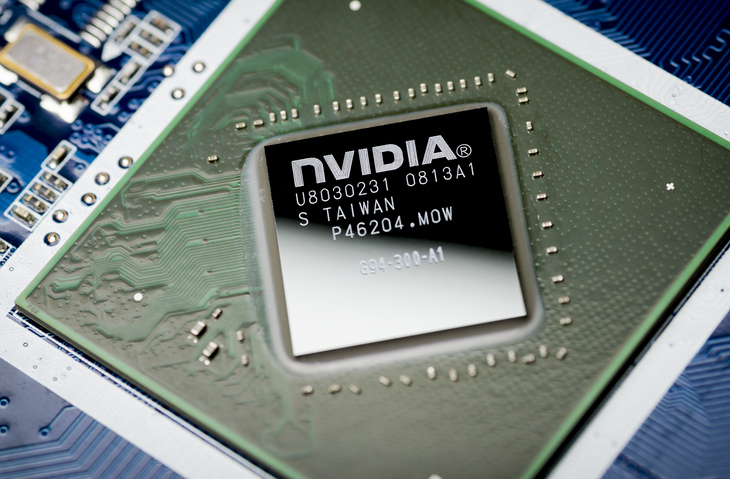
Compute & infrastructure: chips, data centres, and cloud platforms that deliver AI capability to businesses. Examples include NVIDIA, who is the leading provider of AI computing chips (GPUs), and the likes of cloud computing infrastructure providers such as Microsoft and Amazon.
Application layer: software companies embedding AI into workflows, often where productivity gains become measurable to business outcomes. Think tools such as ChatGPT and its (many) competitors.
Physical AI: robotics, autonomous systems, and AI “in the real world”. This layer comes high potential, but even higher uncertainty – Tesla’s planned rollout of autonomous driving taxis are a well known example.
That whole “ecosystem view” is critical, as it reduces the temptation to go all-in on a single name, single technology, or single prediction about who wins. The key point is that investors don’t need to be “all in” on one company or technology, but rather a diversified approach can provide exposure across all layers and minimising concentration risk.
Risk vs reward: the plain-English version
The upside – why investors are excited!
Productivity and cost reductions are tangible: Businesses are deploying AI to automate routine tasks, improve customer service, lift conversion, and speed up decision-making, all of which can translate into better margins and growth.
Adoption is fast: Consumer and enterprise uptake has been unusually rapid compared to past platforms.
The “second-order” opportunities are huge: The first wave is infrastructure, however the bigger economic prize may be in what businesses do once AI becomes a default capability in workflows and products.
The risks – what can go wrong…
Valuation risk: even great companies can be poor investments if bought at the wrong price. Think of real estate, you could find the best house in the best suburb, but if the seller is asking $1.5m but comparable homes are selling for $800k – it’s still a poor investment!
Winner/loser risk: AI is evolving quickly; today’s leader is not guaranteed to remain tomorrow’s leader. Yahoo is a classic reminder of how quickly technology leadership can change. Yahoo reportedly had the chance to acquire Google very early on (around 1998) for a reported US1m and didn’t. Today, Alphabet (Google’s parent company) is worth around US$4 trillion, while Yahoo’s core internet business was ultimately sold to Verizon in 2017 for ~US$4.48 billion.
Concentration risk: many investors already have big exposure to a small group of large tech companies via indexes – particularly within their industry super funds –without necessarily realising it.
Regulatory, energy, and supply-chain constraints: AI needs compute, energy, talent, and access to advanced hardware – all of which can create bottlenecks, particularly in relation to energy and hardware.
Headline risk and volatility: sentiment can swing sharply and often with little notice, especially when a theme becomes crowded.
The NVIDIA lesson: winners can take decades – and still be fragile along the way
A useful reminder in markets is that “obvious in hindsight” – usually wasn’t obvious at the time.
NVIDIA is now widely seen as a central beneficiary of the AI boom. But its journey wasn’t a straight line. Jensen Huang, Co-Founder, President and CEO of NVIDIA, has repeatedly spoken about building the company with a constant fear of failure over the years.
Pure index investing can sometimes underweight emerging winners such as NVIDIA early. As companies only enter major indexes once they’re already valuable, the strategic use of active fund managers can be critical in this space. Technology shifts can reorder markets quickly and sometimes the “future winner” looks messy for a long time before it looks inevitable.
What LINK Wealth believes: opportunity is bigger than the risk if your portfolio is positioned correctly
“AI is too important to ignore, but too fast-moving to rely on a single company or prediction.” – Richard Leal, Managing Director of LINK Wealth.
“We want clients to participate in the upside of AI, while keeping portfolios diversified enough that a single disappointing outcome doesn’t derail their long-term plan.”
“The way we think about AI is similar to how we think about any major theme: build strong core exposures first, then add targeted “satellite” exposure via proven active managers where it makes sense.”
In practice, that often means:
1.Start with a strong “core”
For most investors, the foundation of a portfolio is still broad diversification, often through diversified index-style exposures across regions and sectors. This helps reduce the risk of being overexposed to any one theme – including AI.
2.Add “satellite” AI exposure thoughtfully Rather than trying to pick the winner, we target exposure across all layers of the AI ecosystem – which may include a blend of enablers, platforms, applications, and selective physical-world opportunities.
We feel this is best achieved via the use of active fund managers who have the time and resources to appropriately research the whole ecosystem, and not just the handful of companies at the top of the “leaderboard”.
3. Manage the real risks – not the loudest headlines
This means being deliberate about portfolio construction – avoiding “all in” bets, diversification – across sectors and regions, valuation discipline, and review – because the space moves quickly!
So… is AI a bubble?
Parts of the market can absolutely behave “bubble-like” at times, especially when excitement becomes the primary driver of price.
But a more useful way to frame it is this:
AI itself is not a fad. It’s a general-purpose technology likely to reshape productivity and business models.
The biggest risk isn’t that AI disappears, it’s that investors approach it the wrong way.
“Our job isn’t to chase the loudest story. It’s to build portfolios that can benefit from structural trends like AI, without relying on a single company being perfect forever.” – Richard Leal
The takeaway
For long-term investors, the better question isn’t “Should I invest in AI?” It’s “How do I gain exposure in a way that’s diversified, sensible, and aligned with my goals?”
At LINK, our view is that AI is more opportunity than risk when implemented as part of a broader, well-diversified strategy, rather than a concentrated punt.
This article contains general information only. It is not intended as nor constitute personal financial advice. This article doesn’t take into account your objectives, financial situation or needs. Before acting, consider whether it’s appropriate for you and seek advice tailored to your circumstances.