
How much do you need to retire in Australia?
Benchmark answer: a comfortable retirement costs about $52,500 a year for a single home-owner or $74,000 for a couple (ASFA Retirement Standard, 2025-26), and ASFA puts the lump sums at roughly $595,000 and $690,000 with a part Age Pension. Fund it entirely from your own capital and the rule-of-25 says you need around 25 times your annual spending. Your number sits somewhere between those two. Here's how to find it.
The retirement readiness check.
Retirement lifestyle
ASFA Retirement Standard annual budgets (2025-26, rounded), or set your own.
Gap to close
- Projected super at 65 (today's dollars)
- $994,452
- Capital for $74,000/yr (rule of 25)
- $1,850,000
- Projected gap
- $855,548
The ASFA lump sums are much lower (roughly $595k single / $690k couple for comfortable) because they assume a part Age Pension tops you up.
Closing it from here means roughly $28,731/yr more into super (or a strategy that works harder; that's the conversation).
Everything is in today's dollars, assuming a 4% p.a. real return (a typical growth fund's long-run return net of fees and inflation, not guaranteed) and steady contributions. It ignores tax nuances, career breaks, the Age Pension and market sequence risk: the things a real plan models. General information only, not personal advice.
The capital each income level needs, and what super grows to.
Both tables run the same arithmetic as the readiness check above. The first applies the rule of 25 to the income you want. The second projects a super balance forward in today's dollars at a 4% real return with $15,000 a year going in.
| Retirement income you want | The same, per month | Capital needed (rule of 25) |
|---|---|---|
| $33,500 a year | $2,792 a month | $837,500 |
| $48,500 a year | $4,042 a month | $1,212,500 |
| $52,500 a year | $4,375 a month | $1,312,500 |
| $74,000 a year | $6,167 a month | $1,850,000 |
| $100,000 a year | $8,333 a month | $2,500,000 |
Capital needed = annual spending × 25, the 4% drawdown rule the check uses. It assumes no Age Pension. The ASFA lump sums land far lower (about $595,000 single and $690,000 couple for comfortable) because they assume a part pension tops you up.
| Years until you retire | From $100,000 today | From $250,000 today | From $500,000 today |
|---|---|---|---|
| 10 years | $328,116 | $550,153 | $920,214 |
| 15 years | $480,448 | $750,590 | $1,200,826 |
| 20 years | $665,783 | $994,452 | $1,542,233 |
| 25 years | $891,272 | $1,291,148 | $1,957,607 |
| 30 years | $1,165,614 | $1,652,123 | $2,462,973 |
Balance × 1.04 each year plus $15,000 of contributions, compounded, in today's dollars. 4% is a typical growth fund's long-run return net of fees and inflation, not a guarantee. It ignores tax nuances, career breaks, the Age Pension and market sequence risk.
The two numbers everyone quotes, and why they differ.
The ASFA Retirement Standard prices a real retirement budget each quarter: modest (~$33,500 single / $48,500 couple a year) and comfortable (~$52,500 / $74,000). Its famous lump sums (about $595,000 for a single, $690,000 for a couple) look achievable because they assume the Age Pension progressively tops you up as your balance runs down.
The rule of 25 (the 4% drawdown rule) prices independence: 25 times your annual spending, no pension assumed. For the same comfortable couple that is ~$1.85m. Neither number is wrong; they answer different questions, and most real plans land between them.
One date worth knowing: your preservation age (when you can access super) is 60 for anyone born after 30 June 1964. The Age Pension starts separately at 67. Retiring in the 60-67 window means your super carries everything until the pension arrives.
How much super should you have at your age?
ASFA's guide to the balance that keeps you on course for a comfortable retirement at 67 (indicative and rounded; the live figures move with markets and wages; check ASFA's Super Balance Detective for today's number):
| Age today | Balance to be on track |
|---|---|
| 30 | ≈ $65,000 |
| 35 | ≈ $110,000 |
| 40 | ≈ $160,000 |
| 45 | ≈ $220,000 |
| 50 | ≈ $290,000 |
| 55 | ≈ $370,000 |
| 60 | ≈ $460,000 |
| 65 | ≈ $570,000 |
Behind? You are in the majority, and the levers get stronger the earlier you pull them: salary-sacrifice and catch-up concessional contributions, investment settings inside super, spouse contributions and splitting, debt recycling outside super, and, for business owners, an SMSF that owns your premises. A transition-to-retirement pension can also cut tax in the final working years.
The people who model the real version.
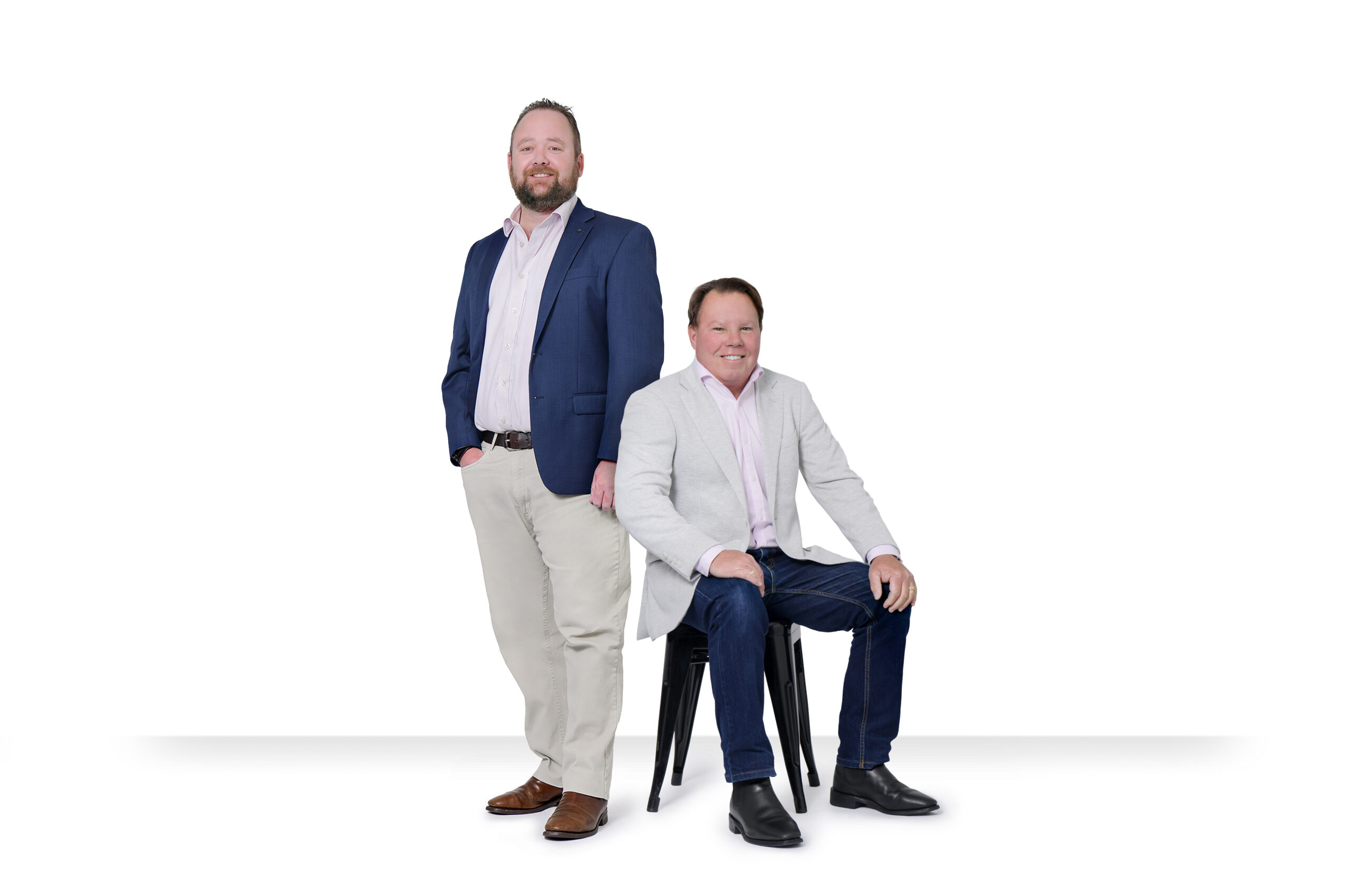
A calculator assumes a steady 4% and a straight line. Richard Leal (AR 327265) and PJ Byrne run the version with your tax position, contribution caps, the Age Pension and a bad first year of retirement in it. That is the Retirement Funding Workshop, and the first conversation before it costs nothing.
From estimate to plan
The check gives you a number. The plan gets you there.
A licensed adviser models your real position (tax, Age Pension, contribution caps, market sequence) in a free discovery meeting, or one-on-one in the $660 Retirement Funding Workshop (Value Guarantee: full refund if it is not worth it).
Frequently asked questions.
How much money do you need to retire in Australia?
As a benchmark, the ASFA Retirement Standard (2025-26) puts a comfortable retirement at roughly $52,500 a year for a single home-owner or $74,000 for a couple, and ASFA estimates lump sums of about $595,000 (single) or $690,000 (couple) get you there with a part Age Pension. If you want to fund the same lifestyle without relying on the pension, the rule-of-25 says you need about 25 times your annual spending: $1.3m-$1.85m. Your real number depends on your spending, housing and health, which is what a retirement plan works out.
How much do I need to retire at 60 in Australia?
Retiring at 60 instead of 67 means funding roughly seven extra years yourself, with no Age Pension until 67. As a rough guide, add your annual lifestyle cost for each early year on top of the lump sums above. A comfortable single retiring at 60 is closer to $950,000+ than $595,000. Early retirement is exactly the scenario worth modelling properly before you commit.
When can I access my super?
At your preservation age, which is 60 for anyone born after 30 June 1964, so effectively 60 for everyone still working. You can access super at 60 if you retire (or via a transition-to-retirement pension while still working), and at 65 regardless of work status. The Age Pension, separately, starts at 67.
Does the Age Pension count towards retirement income?
Yes, and it does more of the work than most people expect: ASFA's comfortable lump sums assume a part Age Pension tops up your drawdown as your balance runs down. The full couple rate is roughly $45,000 a year (indexed). Assets and income tests decide your entitlement, another reason two households with the same super can need very different plans.
Is $500,000 in super enough to retire on?
For a couple who own their home, roughly $500,000 plus the Age Pension can sustain a lifestyle between ASFA's modest and comfortable standards. For a single, it is close to ASFA's comfortable lump sum. Whether it is enough for you depends on the retirement you actually want. Run your numbers through the readiness check above, then test them properly in a Retirement Funding Workshop.
Innovative solutions. Unmatched service. Delivered as promised.
See your real retirement number.
The readiness check is a rule of thumb. Your plan should not be. Book a free, no-obligation discovery meeting and we'll model your actual position.
Call us
(07) 2101 4377Find us
Level 1, 57 Berwick Street, Fortitude Valley 4006
5.0 · based on 35 Google reviews